


Quick answer
Chain of custody in medical courier transport is the documented, unbroken record of who held a shipment, when and where it changed hands, and what condition it was in at each step, from pickup to final handoff. It lets the receiving lab or hospital confirm the item was never unaccounted for, tampered with or mishandled.
Key takeaways
- Every handoff is recorded: who, when, where and in what condition.
- GPS shows where a vehicle is; chain of custody shows who was responsible.
- A gap in the record can put a specimen’s integrity in question.
- Patient details on the paperwork can be protected health information under HIPAA.
What does chain of custody mean for a medical shipment?
It means that at every moment between pickup and delivery, one named person is responsible for the shipment, and the record proves it.
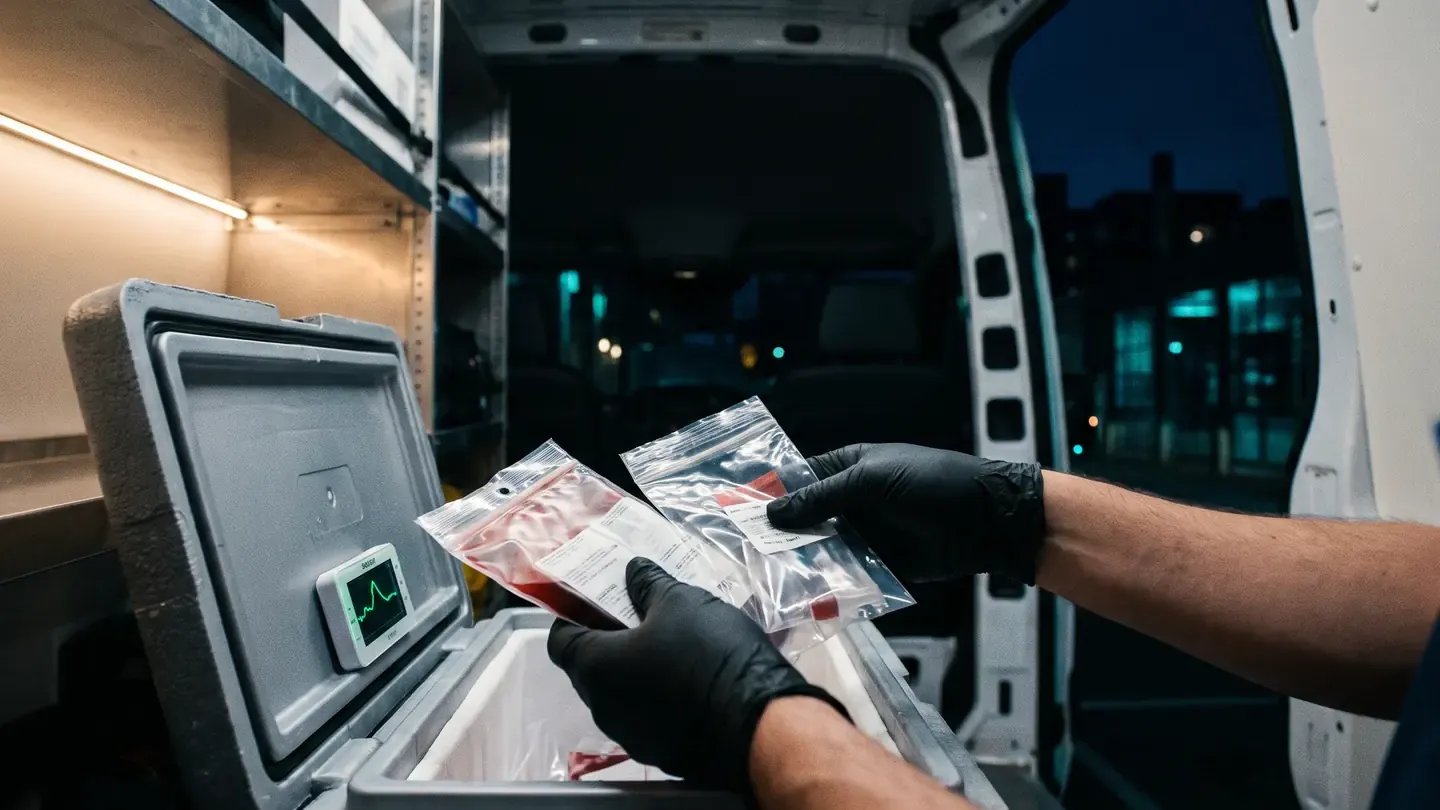
A specimen, organ or device usually passes through several hands: the nurse or lab technician who releases it, the courier who carries it, and the receiving team who signs for it. Chain of custody is the paper or electronic trail that links those hands together. Each transfer is recorded with a name, a time, a place and a note on the condition of the package.
Definition
Chain of custody
The chronological record of the custody, control and condition of an item, from the moment it is collected or released until it is received at its destination.
It is not the same as tracking. Live GPS tells you where a vehicle is right now. Chain of custody tells you who had the shipment, and whether it arrived in the condition it left in. A well-run medical courier provides both.
What should a chain-of-custody record include?
At minimum: a shipment identifier, the people at every handoff, the time and place of each transfer, the condition of the package, and any exception.
| Field | What it records | Why it matters |
|---|---|---|
| Shipment ID | A unique reference that matches the label and the paperwork | Ties the record to one physical package |
| Release at pickup | Name and signature of the person releasing it, with time and location | Starts the chain with a named, accountable person |
| Courier | Who carried it, and in which vehicle | Shows who was responsible in transit |
| Condition | Packaging intact, seals unbroken, temperature where required | Proves the shipment left and arrived in the right state |
| Each transfer | Time, place and both parties at any intermediate handoff | Closes the gaps between people |
| Receipt at delivery | Name and signature of the receiving person, with time | Ends the chain and transfers responsibility |
| Exceptions | Delays, temperature excursions or damaged packaging, noted when they happen | Lets the receiving team judge the sample with full facts |
What happens at each handoff?
A typical handoff follows the same four checks, whoever is involved.
Step 1: Match the item to the paperwork
The shipment ID, label and manifest are checked against each other before anyone signs.
Step 2: Inspect the package
Packaging and seals are checked for damage or tampering. For temperature-sensitive cargo, the reading is noted.
Step 3: Sign and time-stamp
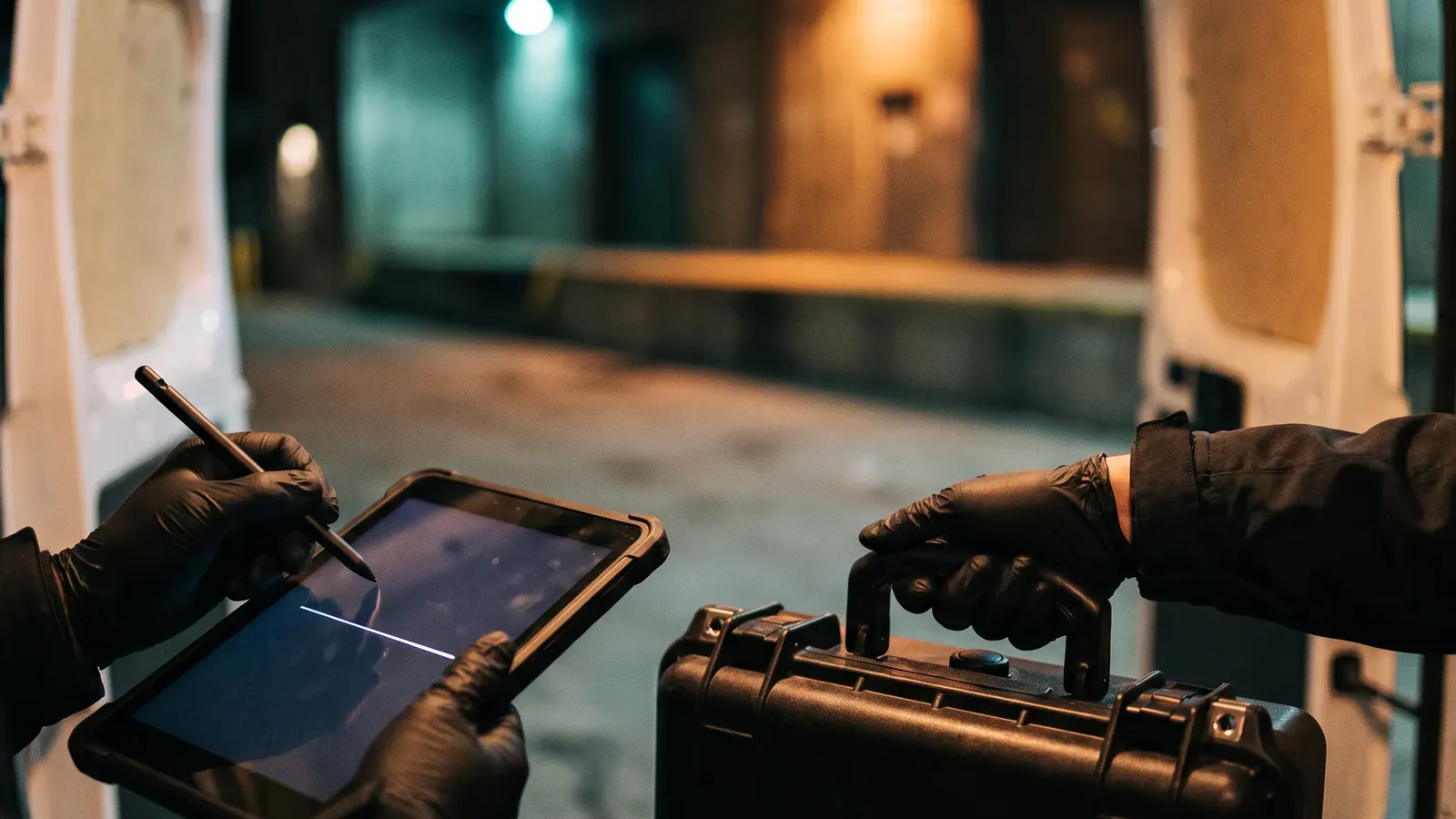
The person releasing the shipment and the person receiving it both sign, with the time and location recorded.
Step 4: Record any exception immediately
Anything unusual is written down at the moment it is found, not reconstructed later.
Why does chain of custody matter to labs and hospitals?
Because a result is only as trustworthy as the sample behind it, and the record is how a lab knows the sample can be trusted.
- Sample integrity. If a specimen was left unattended, delayed or exposed to the wrong temperature, the receiving lab needs to know before it reports a result.
- Accountability. When every transfer is signed, there is no question about who had the shipment at any point.
- Evidence. Some testing depends on documented custody by regulation. U.S. Department of Transportation workplace drug testing, for example, documents every collection on a Custody and Control Form that follows the specimen from the collector to the laboratory.3
- Safety. Knowing who handled a package matters if it leaks or is damaged. Employees whose job duties involve reasonably anticipated contact with blood or other potentially infectious materials are covered by OSHA’s Bloodborne Pathogens Standard.4
Moving something time-critical right now?
Dispatch answers 24/7. Calling is always faster than the form for a STAT pickup.
How is patient privacy protected along the way?
By keeping patient information on the paperwork to what each person actually needs, and treating it as protected health information.
The HIPAA Privacy Rule protects individually identifiable health information held or transmitted by covered entities and their business associates.1 Its “minimum necessary” standard asks organizations to limit the use and disclosure of that information to the minimum needed for the task.2 For transport, that usually means labels and manifests carry an identifier rather than a patient’s full details, and records are shared only with people involved in the shipment.
How does Ridewell Cargo handle chain of custody?
Every Ridewell Cargo run has live GPS and a signed chain of custody, from pickup to handoff.
Shipment and patient details are handled under HIPAA protocol, drivers are trained in bloodborne pathogen safety, and dispatch answers 24 hours a day, 7 days a week. Credentials, including USDOT and NPI numbers, can be checked on the public registries from our Compliance page.
FAQ
Questions people also ask.
Is GPS tracking the same as chain of custody?
No. GPS tracking shows where a vehicle is. Chain of custody is the signed record of who was responsible for a shipment, and what condition it was in, at every handoff. Medical shipments benefit from both: tracking for visibility in transit, and custody for accountability.
Who signs a chain-of-custody record?
The person who releases the shipment at pickup, the courier who carries it, the person who receives it at delivery, and anyone who takes it over at an intermediate transfer. Each signature is recorded with a time and a location.
What happens if there is a gap in the chain of custody?
The receiving lab or hospital may not be able to confirm the sample’s integrity. Depending on its own acceptance policy, it may review the shipment before using it or, in some cases, ask for a new sample.
Does chain of custody apply to medical equipment too?
Yes. For high-value equipment such as imaging or dialysis units, a record of condition at pickup and delivery, with signatures at each handoff, documents who was responsible for the equipment throughout the move.
Can’t find your answer? Dispatch can help at any hour.Call (480) 470-0000
Sources
Where every figure comes from.
1
U.S. Department of Health & Human Services
Summary of the HIPAA Privacy Rule (opens in a new tab)
hhs.gov
2
U.S. Department of Health & Human Services
Minimum Necessary Requirement (opens in a new tab)
hhs.gov
3
Cornell LII · 49 CFR 40.40
What form is used to document a DOT collection? (Custody and Control Form) (opens in a new tab)
law.cornell.edu
Editorial standard
How this guide was checked
- Every rule, measurement and limit is footnoted to the primary source it came from: federal regulations and agency guidance.
- Statements about Ridewell Cargo describe services and credentials you can verify on our Compliance page.
- Last reviewed . Regulations change, so check the linked source for the current text.
General information, not legal or regulatory advice.