
Quick answer
Diagnostic specimens that are known or reasonably expected to contain a pathogen, but are not Category A, ship as “Biological substance, Category B” (UN3373). For these, 49 CFR 173.199 requires triple packaging: a leakproof primary receptacle, leakproof secondary packaging with enough absorbent to soak up all the liquid, and a rigid outer package marked with the UN3373 diamond.
Key takeaways
- Three layers: primary receptacle, secondary packaging, rigid outer packaging.
- Liquids need enough absorbent material to soak up the full volume.
- The outer package carries the UN3373 diamond and “Biological substance, Category B”.
- The packaging must pass a drop test from at least 1.2 m (3.9 ft) with no leakage from the primary receptacle.
What is a Category B biological substance?
An infectious substance that is not in a form generally capable of causing permanent disability or life-threatening or fatal disease. It ships as UN3373.
U.S. hazardous materials rules sort infectious substances into two groups.3 Category A covers material capable of causing permanent disability or life-threatening or fatal disease in otherwise healthy humans or animals (UN2814, UN2900, or UN3549 for Category A medical waste). Category B covers infectious material that does not meet that definition, and is described as “Biological substance, Category B” under UN3373. Diagnostic samples that may contain a pathogen are commonly shipped as Category B. Samples sent for routine tests unrelated to infectious disease (for example cholesterol or glucose), with a low probability of being infectious, are excepted from these rules.3
Definition
UN3373
The United Nations number for “Biological substance, Category B”. It appears inside the diamond-shaped mark on the outer package.
What is triple packaging?
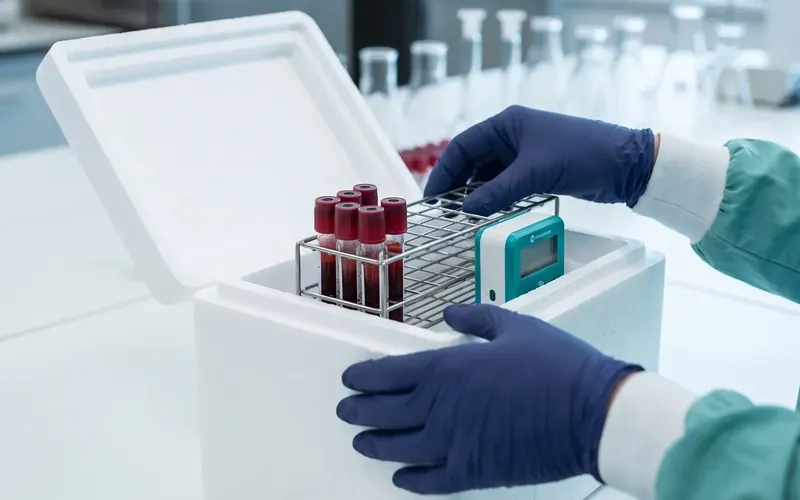
Three nested layers, each one designed to contain a failure of the layer inside it.
Primary receptacle
The tube or container holding the sample. It must be leakproof for liquids (siftproof for solids) and packed so it cannot break, be punctured or leak into the next layer.1
Secondary packaging
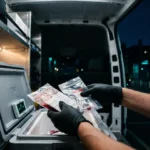
A leakproof bag or canister around the primary receptacle. For liquids, absorbent material sits between the two, enough to absorb the entire contents.1
Rigid outer packaging
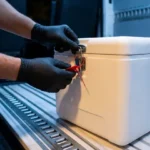
A rigid box with cushioning that holds the secondary packaging securely. At least one surface must measure at least 100 mm × 100 mm.1
Diagram of triple packaging: a primary receptacle inside leakproof secondary packaging with absorbent, inside a rigid outer box marked UN3373.
The completed package must pass a drop test from at least 1.2 meters (3.9 feet) with no leakage from the primary receptacle.1 Ice or dry ice used to keep the contents cool goes outside the secondary packaging or in an overpack,1 and dry ice brings its own shipping requirements.
How must the outer package be marked?
With the UN3373 diamond, the words “Biological substance, Category B” next to it, and a contact who knows the shipment.
| Mark | Requirement |
|---|---|
| UN3373 diamond | Square-on-point mark on a contrasting background; each side at least 50 mm; border at least 2 mm wide; characters at least 6 mm high12 |
| Proper shipping name | “Biological substance, Category B” adjacent to the diamond, in letters at least 6 mm high13 |
| Responsible person | Name and telephone number of a knowledgeable person, on the package or the shipping document1 |
| Overpacks | If packages go into an overpack, the mark and name must be visible or reproduced on the outside12 |
Are there extra limits when specimens fly?
Yes. By air, liquid packaging must withstand a 95 kPa pressure difference, and quantities are capped.
| Limit | Liquids | Solids |
|---|---|---|
| Pressure | Primary or secondary packaging must withstand 95 kPa (0.95 bar, 14 psi) without leaking1 | Not applicable |
| Per primary receptacle | 1 L (34 oz)1 | No per-receptacle limit set1 |
| Per outer package | 4 L (1 gallon), excluding ice, dry ice or liquid nitrogen1 | 4 kg (8.8 lb), excluding refrigerants; does not apply to body parts, organs or whole bodies1 |
Moving something time-critical right now?
Dispatch answers 24/7. Calling is always faster than the form for a STAT pickup.
Who is responsible for packaging: the lab or the courier?
Under federal rules, the person who offers the shipment, usually the lab, clinic or hospital, is responsible for packaging it correctly, and a carrier may not accept a shipment that isn’t properly packaged and marked.
The Hazardous Materials Regulations say no one may offer or accept a hazardous material for transportation unless it is properly classed, described, packaged, marked, labeled and in condition for shipment.4 Where more than one party prepares a shipment, each is responsible for the steps it performs.4 The rules also contain specific exceptions, including one for non-Category A patient samples carried by a private or contract carrier in a motor vehicle used exclusively for such materials, and one for samples sent for routine testing unrelated to infectious disease that are unlikely to be infectious.3 Triple packaging remains the safest default, and your facility’s procedures may require it whichever exception applies.
Good to know. General information, not regulatory advice. Follow your facility’s procedures and the current text of 49 CFR, and ask your safety officer if you are unsure how a shipment should be classified.
How does Ridewell Cargo handle specimen runs?
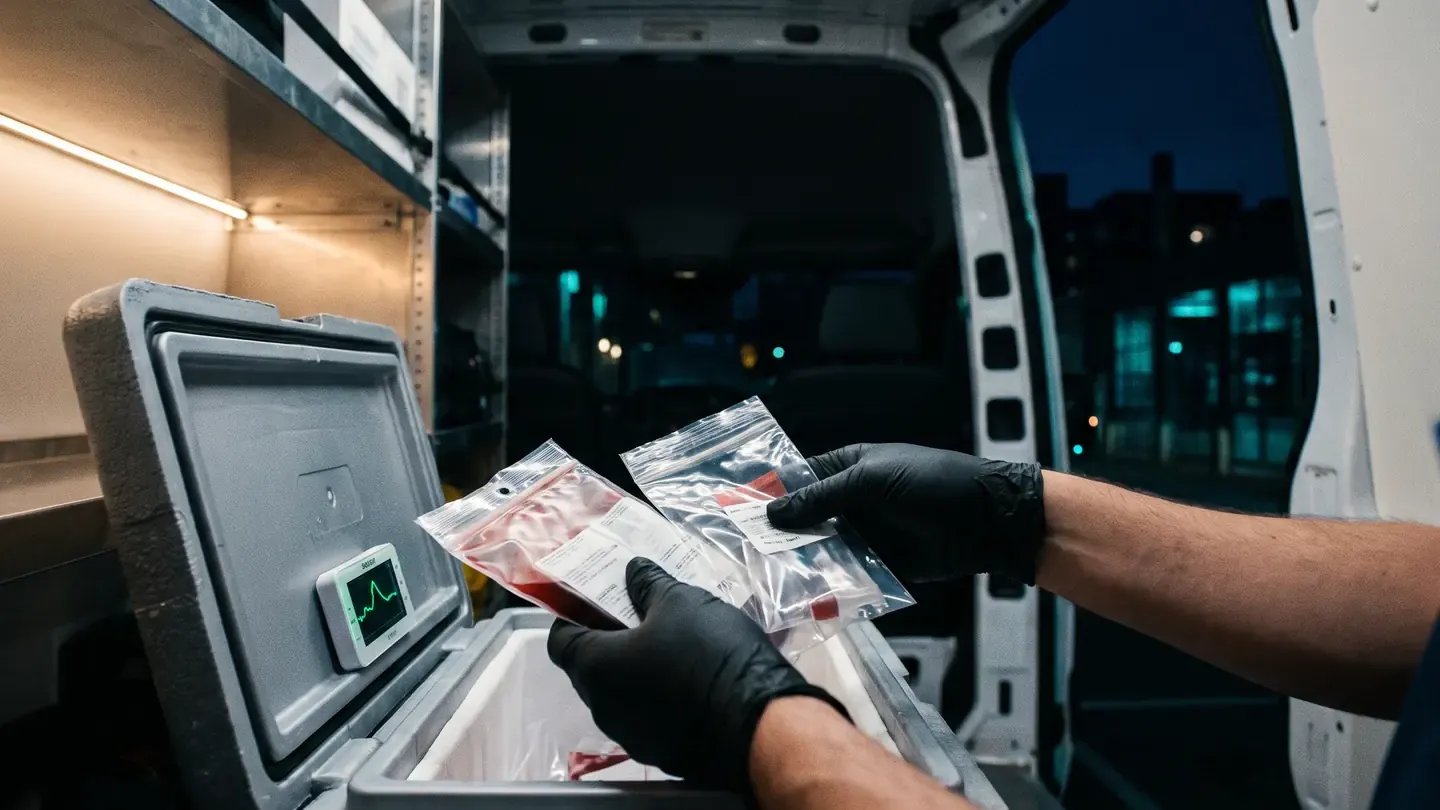
Blood products and bio-specimens move under temperature monitoring with bloodborne pathogen-trained drivers, live GPS and a signed chain of custody.
Scheduled and urgent runs are both available, and dispatch answers 24/7. See Blood & Specimen Delivery for how specimen runs work, or call dispatch for a STAT pickup.
FAQ
Questions people also ask.
What is the difference between Category A and Category B?
Category A infectious substances are capable of causing permanent disability or life-threatening or fatal disease in otherwise healthy humans or animals, and ship as UN2814, UN2900 or, for Category A medical waste, UN3549. Category B covers infectious substances that do not meet that definition, and ships as UN3373, “Biological substance, Category B”.
What does the UN3373 mark look like?
A diamond (a square set on its point) on a contrasting background, with “UN3373” inside. Each side must be at least 50 mm long, the border at least 2 mm wide and the characters at least 6 mm high. “Biological substance, Category B” goes next to it.
How much liquid can one Category B package hold by air?
Up to 1 liter in each primary receptacle and up to 4 liters in the outer package, not counting ice, dry ice or liquid nitrogen used to keep the contents cool.
Who should I call if a STAT specimen needs to move now?
Call Ridewell Cargo dispatch at (480) 470-0000. Dispatch answers 24 hours a day, 7 days a week, and calling is always faster than submitting a form for a time-critical pickup.
Can’t find your answer? Dispatch can help at any hour.Call (480) 470-0000
Sources
Where every figure comes from.
2
PHMSA · U.S. Department of Transportation
Safety advisory: transporting UN3373 Category B samples (opens in a new tab)
phmsa.dot.gov
3
Cornell LII · 49 CFR 173.134
Class 6, Division 6.2: definitions and exceptions (opens in a new tab)
law.cornell.edu
Editorial standard
How this guide was checked
- Every rule, measurement and limit is footnoted to the primary source it came from: federal regulations and agency guidance.
- Statements about Ridewell Cargo describe services and credentials you can verify on our Compliance page.
- Last reviewed . Regulations change, so check the linked source for the current text.
General information, not legal or regulatory advice.